How to Improve Pronunciation: A Guide for Adult Learners
Most adult learners do not need to fix their entire accent. They need to fix five to eight sounds causing misunderstandings, and practice those.
Adult learners rarely need to fix their whole accent; they need to fix the five to eight specific sounds that cause misunderstandings. Aim for intelligibility, identify which sounds trip up listeners, and drill those in real words and sentences rather than trying to erase your accent entirely.
What You Are Actually Trying to Fix
Most learners think of pronunciation as an all-or-nothing problem: either you have a good accent or you don't. This framing leads to either obsessive overwork or resigned avoidance. Neither helps.
The practical goal is intelligibility: being easily understood by native speakers without requiring them to concentrate. This does not require a native-like accent. It requires accuracy on the specific sounds that cause the most comprehension failures, combined with natural rhythm and stress patterns.
For most adult learners, this means identifying 5 to 8 problem sounds specific to your native language background, and targeting those deliberately. A Spanish speaker learning English has different problem sounds from a Japanese speaker learning English. An English speaker learning Mandarin has a completely different set of targets from an English speaker learning French.
You do not need to overhaul your entire accent. You need to find your highest-impact targets and fix those specifically.
Step 1: Phoneme Audit
Before you practise anything, you need to know what to practise. This is the step most learners skip, which is why their pronunciation work is unfocused.
Record yourself reading a standard passage of 100 to 150 words in your target language. A news article introduction, a paragraph from a graded reader, or a memorised dialogue all work well. Then get feedback from at least one native speaker on which sounds are causing comprehension difficulty.
A native speaker will tell you something more useful than a textbook: the specific sounds that are slowing them down or requiring extra effort to understand. These are your targets, not the sounds you personally feel uncertain about (which may be different).
A more revealing self-audit comes from recording yourself mid-conversation rather than reading a prepared passage aloud. Pronunciation under mild conversational pressure surfaces errors that carefully read passages can mask, because real speaking removes the time you have to monitor and correct yourself. Record a short AI roleplay scene in PalmSpeak, listen back, and note where your output sounds furthest from what you were hearing from the AI's responses. Those gaps are your starting targets.
Make a list of your top three to five problem sounds. Write them down. These are what the next four weeks are for.
Step 2: Minimal Pairs Practice
Minimal pairs are word pairs that differ by a single sound (ship/sheep, pen/pan, bet/bat). Drilling minimal pairs trains your ear and your mouth to distinguish and produce sounds that your native language collapses together.
How to practise: take two minimal pairs for one of your target sounds. Listen to a native speaker produce each one. Repeat. Record yourself. Listen back. The goal is not just to produce the right sound, but to hear the difference reliably. If you cannot hear it, you cannot produce it consistently.
Start with listening discrimination (can you identify which word was said?) before moving to production (can you produce the right sound consistently?). Discrimination typically develops faster than production, but both are necessary.
Ten minutes daily on your specific problem sounds is enough. Track which pairs you are reliably getting right and which you are still confusing. Move on from a pair only when you can produce it correctly eight times out of ten on the first attempt.
Focus on sounds within real words and sentences rather than isolated phonemes. "The ship is large" trains the sound in context; repeating "/ɪ/" in isolation does not.
Step 3: Shadowing for Rhythm and Connected Speech
Individual sounds are only part of what makes pronunciation intelligible. Rhythm, stress, and connected speech are equally important and significantly harder to learn from a textbook.
In natural speech, words run together. Unstressed syllables reduce. Consonants at word boundaries influence each other. A sentence that looks straightforward on the page sounds very different when spoken at natural speed. Non-native speakers who have perfect individual phoneme pronunciation often still sound foreign because their rhythm and stress patterns differ from native norms.
Shadowing trains these patterns directly. You listen to native audio and speak simultaneously, matching the speaker's pace, intonation, and rhythm. You are not translating or constructing sentences. You are running native speech patterns through your own vocal cords at native speed. This trains the motor patterns of natural-sounding speech in a way that no amount of drilling individual sounds can replicate.
For pronunciation specifically: focus on passages where your target sounds appear frequently. Repeat each passage at least five times before moving on. The goal is not to understand the content better on each repetition; it is to produce the speech patterns more automatically.
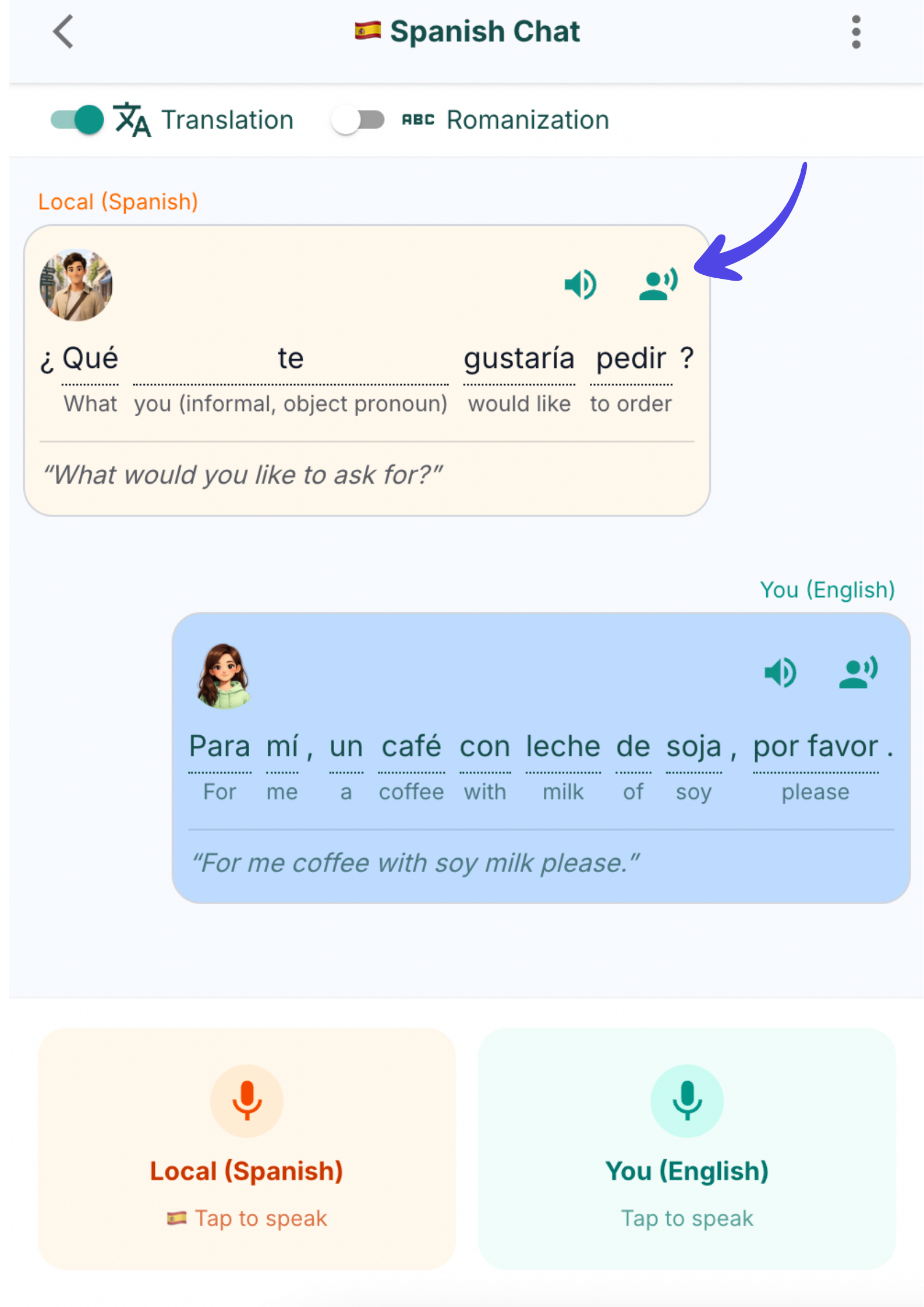
Shadow real locals, not studio recordings
When you chat with a local through PalmSpeak, the conversation is saved. Listen back anytime to hear exactly how they said it in the foreign language: their natural rhythm, intonation, and connected speech. That recording becomes your shadowing material: real native speech from a real exchange, not a rehearsed script.
Free forever plan · No credit card required
Start a free conversation →Step 4: Getting Real Feedback
Self-monitoring is unreliable for pronunciation. Your brain corrects for what you intended to say, not what you actually said. This is why you can speak with a strong accent for years without noticing: your internal monitoring is filling in the gaps your mouth is not producing.
You need external feedback on a regular basis. There are three practical sources:
Recording playback. Hearing your own voice played back is the most immediate and available form of external feedback. Record yourself during a real speaking situation, not just reading aloud, and listen back without trying to correct as you go. The sounds that feel wrong on playback are the ones to target next. PalmSpeak records your voice during AI roleplay scenes so you can listen back to exactly how you sounded under mild conversational pressure. This is more revealing than a prepared reading, because real speaking removes the self-monitoring time that masks errors.
Native speaker feedback. Ask a native speaker to listen to you and tell you which sounds are causing them to work harder to understand. This is the highest-value feedback source because native speakers can identify which deviations actually affect intelligibility and which are simply minor accent markers. Real conversations with native speakers through PalmSpeak's live translation feature give you this exposure regularly, with the content barrier removed so you can focus on production.
Attention during real conversation. Note the moments when you are asked to repeat yourself, or when a native speaker's face signals confusion. These are direct comprehension failure signals: your pronunciation in that word or phrase is below the intelligibility threshold. Write them down immediately after the conversation while they are fresh.
Without regular external feedback, pronunciation errors become habits. Schedule it: at least once per week, get feedback from a source outside your own ear.
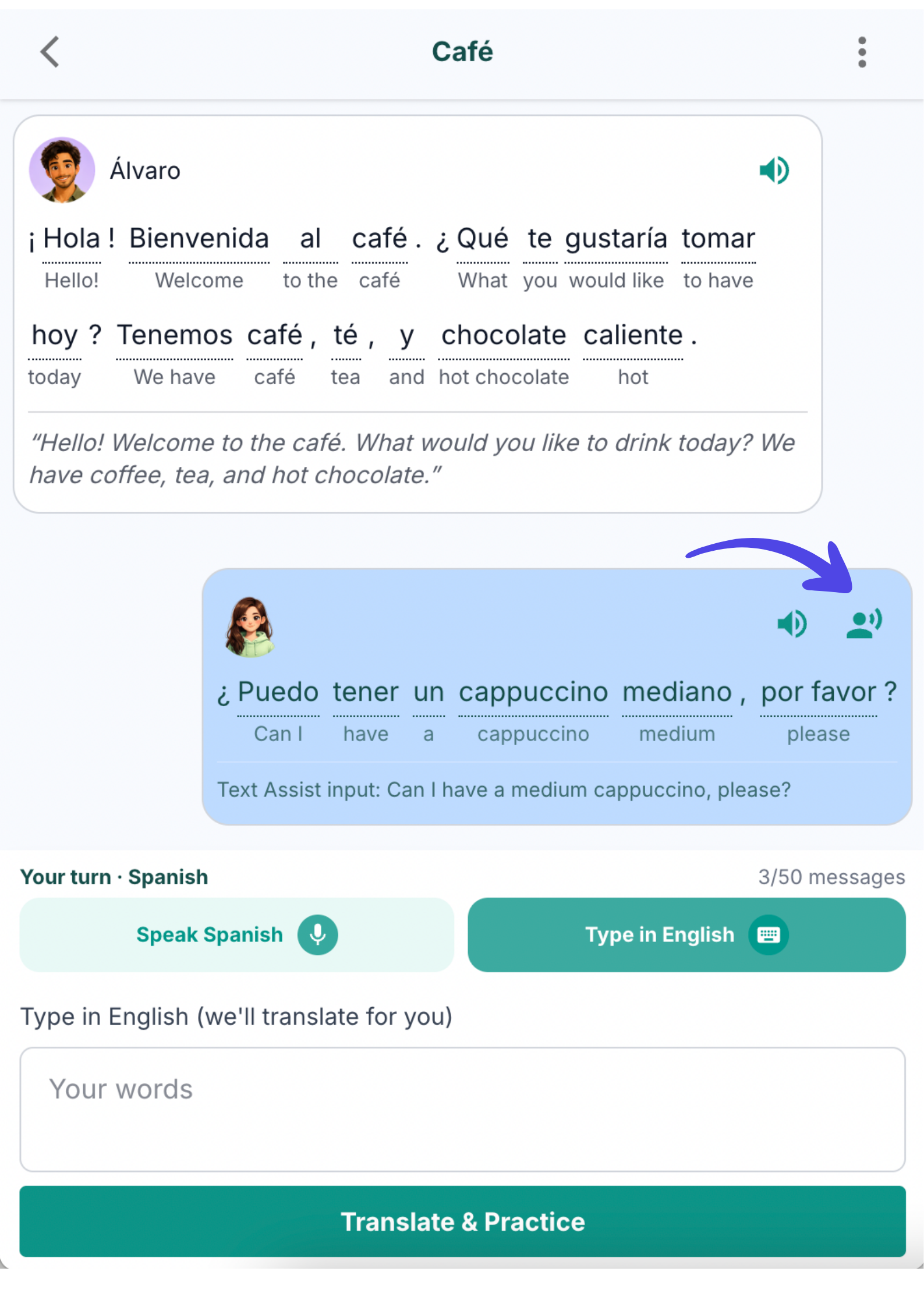
Hear the full sentence spoken by AI, then match it
In every PalmSpeak AI conversation, you can tap to hear the full sentence spoken aloud. Listen to exactly how it sounds at natural speed, then record your own response. The gap between what you hear and what you produce is your most honest pronunciation target.
Free forever plan · No credit card required
Start practising free →A Four-Week Pronunciation Protocol
- Week 1: Audit and target setting. Record yourself, get native speaker or AI feedback, identify your top three problem sounds. Note them. Do not start drilling anything yet; just listen carefully to how native speakers produce those sounds in natural speech.
- Week 2: Minimal pairs drilling. 10 minutes daily on minimal pairs for your top three sounds. Focus first on discrimination (hearing the difference), then on production. Record yourself and compare.
- Week 3: Shadowing. 15 minutes daily with native audio that contains your target sounds frequently. Same passage at least five times before switching. Focus on rhythm and connected speech, not just individual sounds.
- Week 4: Feedback and adjustment. Record yourself again, get feedback, compare to week one. Identify which of your target sounds has improved most and which needs more work. Adjust the next cycle accordingly.
Repeat this cycle. Most learners work through three to four cycles (12 to 16 weeks) before their problem sounds feel reliable in natural conversation. Progress is not linear: you may feel like you have plateaued in weeks two and three before a noticeable shift in week four.
PalmSpeak
Practice Speaking From Day One
Jump into a structured scene and practice speaking in context: no partner needed, no judgment, available any time.
Free forever plan · No credit card required
Start a free conversation →Common Mistakes to Avoid
Practising sounds in isolation
Fix: Drilling a sound in isolation (repeating 'th' over and over) builds limited muscle memory because sounds behave differently in connected speech. Words contract, vowels reduce, and consonants influence each other in context. Practice your target sounds inside real sentences and phrases, not in isolation.
Trying to fix everything at once
Fix: Identifying ten problem sounds and practising all of them simultaneously produces slow improvement across all of them. Identify your three most communication-critical sounds and focus there for four to six weeks before expanding. Targeted depth beats broad coverage every time.
Never getting feedback from outside your own ear
Fix: You cannot reliably hear your own pronunciation errors because your brain corrects for what you intended to say. You need external feedback: listen back to recordings of yourself speaking, seek input from native speakers, or pay attention to moments in conversation where you are asked to repeat yourself. Without external feedback, errors that feel correct to you become permanent habits.
Continue Reading
Speaking GuideTechnique
How to Use the Shadowing Technique to Sound More Natural
A dedicated guide to the most effective method for rhythm and connected speech
Read more →
Practice
How to Practice Speaking a Language Alone (Without a Partner)
Build the daily solo speaking habit that makes pronunciation work stick
Read more →
Confidence
How to Overcome Speaking Anxiety When Learning a Language
If accent anxiety is stopping you from speaking, start here
Read more →
Frequently Asked Questions
How do I improve my accent in a foreign language?
Can adults fix their pronunciation, or is it too late?
How long does it take to improve pronunciation significantly?
Is shadowing effective for pronunciation?
The conversation is waiting.
PalmSpeak guides you into real speaking situations from your first session. No partner needed, no prep required.
Free forever plan · No credit card required
Start a free conversation →